
- Hotline: 0909 981 890

Advantages of inverted bucket steam traps compared to float-type steam traps
Advantages of inverted bucket steam traps compared to float-type steam traps
When you need a steam trap with high water hammer resistance, durability in high-pressure systems, and reliable operation under conditions of severe impact or surge loads.

Durability and Operating Conditions:
Water hammer resistance: Inverted bucket traps withstand strong pressure surges and water hammer, with a low risk of damage to internal linkages.
High-pressure capability: Inverted bucket traps handle medium- to high-pressure steam environments much better than standard float traps.
Robust construction: Fewer vulnerable moving parts mean a longer service life in harsh industrial environments.
Discharge and Maintenance Differences:
Cyclic vs. continuous: Inverted bucket traps discharge condensate intermittently, whereas float traps discharge continuously.
Dirt tolerance: The intermittent discharge action of the bucket trap helps flush out dirt and debris.
Failure mode: Bucket traps tend to fail in the open position if they lose their water seal (prime), preventing dangerous condensate backup.
Common Steam Trap Issues:
Failure in the open position: The valve or internal mechanism gets stuck open, allowing live steam to escape directly into the condensate line, resulting in significant energy waste and increased operating costs.
Failure in the closed position: Debris or damaged components completely block the discharge orifice, causing condensate to pool inside the equipment, reducing heat transfer efficiency, and creating a risk of freezing.
Mechanical wear: Continuous opening/closing cycles and high pressure cause wear on internal metal parts, bellows, or valve discs over time.
If you are experiencing any of the steam trap problems listed above, please contact us for advice on solutions.
TL Plus Engineering specializes in consulting on system and equipment improvements, and calculating energy recovery for saturated steam systems.
If you need to improve your saturated steam pressure reducing valve system, please contact us via email sales(at)tlplus-engineering.com.
TL Plus Engineering Company is the authorized distributor of Watson McDaniel products in Vietnam and other Asian countries.
💡 Reference products:


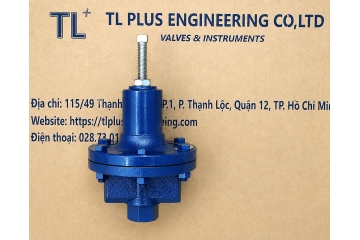
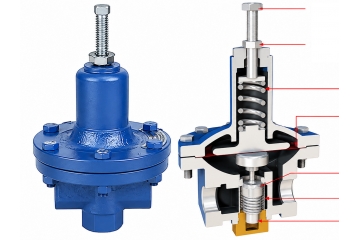
Pressure reducing type O, Watson Mcdaniel USA Pressure reducing type HD, Watson Mcdaniel USA




Related posts
-
![Pressure reducing valves are used for saturated steam and pressure reducing valves are used for liquid fluids]()
Pressure regulating valves (also known as pressure reducing valves) are crucial devices in industrial and commercial piping systems. Their primary function is to maintain a stable downstream pressure, regardless of upstream pressure fluctuations or changes in flow rate. Depending on the application, selecting the appropriate valve is essential to ensure efficient and safe operation of the valve and the entire system.
-
![How Does a Direct Pressure Reducing Valve for Saturated Steam Work?]()
At startup, the pressure regulating bolt is in the loosen state, the inlet steam pressure and the valve seat spring are in the closed state. We begin by turning the pressure regulating bolt on top of the valve clockwise. The bolt moves linearly, pushing the spring downwards, simultaneously lowering the valve diaphragm, controlling the valve to open, and the fluid and outlet pressure begin to increase. The pressure inside the valve body pushes the diaphragm upwards, balancing the spring force. The pressure after the valve increases simultaneously until it reaches the set pressure value, at which point the valve begins to close gradually, preventing the pressure after the valve from exceeding the set threshold.
-
![FLASH STEAM RECOVERY]()
When the pressure of saturated condensate is reduced, a portion of the liquid “flashes” to low-pressure steam. Depending on the pressures up stream, the flash steam contains normally 3% to 50% of the energy content of the original condensate. Almost cases, condensate receivers the flashing steam is vented to atmosphere and its energy content lost.
-
![WHAT IS STEAM ?]()
-
![WHY USE STEAM?]()
There are three main forms of energy used in industrial processes: electricity, direct heat, and steam.
-
![SATURATED STEAM TABLE]()
-
![]()
-
![WHY NEED EVAPORATOR ?]()




Copyright © 2020 Technical TL +